
In this article, “Types of Light Pen,” we provide information about the Light Pen, a pen-shaped input and pointing device used to select and interact with objects on a computer screen. It works similarly to a mouse and was traditionally used with CRT monitors.
Light pen
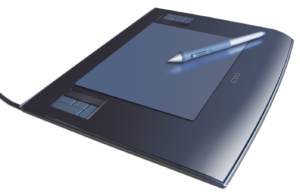
What is a Light Pen?
A Light Pen is an input device and pointing device used to select, point to, or interact with objects displayed on a computer screen.
It is shaped like a pen and can be used to select text, icons, menus, graphical objects, and specific locations on the screen. Traditional light pens were mainly designed to work with CRT (Cathode Ray Tube) monitors.
Simple Definition
A Light Pen is a pen-shaped pointing input device used to select or point to objects displayed on a computer screen.
In simple words, a light pen performs some functions similar to a mouse, but instead of moving a mouse pointer, the user points directly at the screen using the pen.
History of Light Pen
The Light Pen was developed in the late 1950s as part of the MIT Whirlwind computer project.
It became an important early graphical input device because it allowed users to interact directly with objects displayed on a computer screen.
Note: The statement that “Ben Gurley invented the first Light Pen in 1959” is commonly found on some websites, but it is not considered an accurate description of the Light Pen’s documented development.
How Does a Light Pen Work?
The traditional Light Pen was designed to work with a CRT display.
Working Process
- A CRT monitor displays information using an electron beam.
- The electron beam scans different areas of the screen.
- A Light Pen contains a photosensor/light sensor near its tip.
- When the user points the Light Pen at the screen, the sensor detects the light produced when the electron beam reaches that particular location.
- The Light Pen generates an electrical signal.
- The computer receives the signal.
- The computer determines the position of the Light Pen on the screen.
- The selected object or command can then be processed.
Example
Suppose a Calculator icon is displayed on the screen.
Light Pen → Point at Calculator Icon → Light detected → Position identified → Icon selected
Main Components of a Light Pen
A traditional Light Pen generally contains the following components:
1. Light Sensor
The light sensor detects the light generated by the CRT screen.
2. Pen Tip
The tip is used to point directly at a specific location on the screen.
3. Button/Switch
A button may be provided to select an object or perform an action.
4. Electronic Circuit
The electronic circuit processes the signal received from the sensor.
5. Cable
Traditional light pens were generally connected to the computer through a cable.
Applications of Light Pen
A Light Pen can be used for several purposes.
1. Selecting Objects
It can be used to select:
- Icons
- Menus
- Text
- Images
- Graphical objects
2. Drawing
Light pens were used in early computer graphics systems for creating drawings and shapes.
3. Text Selection
A user can point to and select text displayed on the screen.
4. Editing
It can be used to select objects or text for editing.
5. Locating a Position
A Light Pen can identify a specific position on the screen.
6. Computer Graphics
It was useful in graphical applications for selecting and manipulating graphical objects.
7. CAD Applications
Light pens were used in some early Computer-Aided Design (CAD) systems for interacting with graphical objects.
Advantages of Light Pen
1. Direct Interaction
The user can point directly at an object displayed on the screen.
2. Accurate Selection
It can provide accurate selection of specific screen locations.
3. Easy to Use
Its pen-like structure makes it relatively easy to handle.
4. Useful for Graphics
It was useful for drawing and selecting graphical objects.
5. Portable
Because of its small size, it can be easily carried.
6. Requires Less Space
Unlike a mouse, it does not require a large surface for movement.
Disadvantages of Light Pen
1. Limited Display Compatibility
Traditional Light Pens were mainly designed for CRT displays.
2. Not Suitable for Modern LCD Displays
Traditional CRT-based Light Pens generally do not work with ordinary modern LCD displays because they depend on the scanning behavior of a CRT.
3. Hand and Wrist Strain
Long periods of use may cause discomfort or strain in the hand or wrist.
4. Limited Technology
Modern styluses, graphics tablets, and touchscreens provide more advanced functionality.
5. Rarely Used Today
Light Pens have largely become obsolete because modern touchscreen and stylus technologies are more convenient and capable.
Features of Light Pen
1. Pen-Shaped
A Light Pen has a shape similar to a traditional writing pen.
2. Pointing Device
It is a pointing input device.
3. Light Sensor
A traditional Light Pen uses a photosensor to detect light from the CRT display.
4. Direct Selection
It allows the user to directly point at objects on the screen.
5. Graphics Input
It can be used for graphical input and object selection.
6. Lightweight
It is generally small and lightweight.
7. Portable
It can be easily carried from one place to another.
Types of Light Pen
Some websites classify Light Pens as:
- LED Light Pen
- Design Light Pen
- Battery Light Pen
- Corded Light Pen
However, these are not generally accepted as standard technical classifications of traditional Light Pens.
For Computer Fundamentals examinations, it is better to remember the core concept:
Light Pen = Pen-shaped pointing input device + Light Sensor + Traditional CRT display
Light Pen vs Mouse
| Feature | Light Pen | Mouse |
|---|---|---|
| Type | Input/Pointing Device | Input/Pointing Device |
| Shape | Pen-shaped | Mouse-shaped |
| Interaction | Direct pointing at screen | Controls cursor |
| Movement Surface | Screen | Desk/mouse surface |
| Traditional Display | CRT | Not limited to CRT |
| Graphics | Useful for direct graphical selection | Useful for general selection |
| Modern Usage | Rare | Widely used |
| Extra Space | Very little | Requires movement space |
Light Pen vs Touchscreen
| Light Pen | Touchscreen |
|---|---|
| Separate input device | Display and input system combined |
| Traditional models used CRT | Modern touchscreens use LCD/OLED and related technologies |
| Requires a pen | Can use finger or stylus |
| Rarely used today | Widely used today |
| Older technology | Modern technology |
Modern Alternatives to Light Pen
Today, the following technologies have largely replaced traditional Light Pens:
- Touchscreen
- Stylus
- Digital Pen
- Graphics Tablet
- Interactive Display
Graphics tablets and modern styluses are particularly useful for digital drawing and professional graphic design.
Frequently Asked Questions (FAQ)
Q1. What is a Light Pen?
Answer: A Light Pen is a pen-shaped pointing input device used to point at and select objects displayed on a computer screen.
Q2. Is a Light Pen an input device?
Answer: Yes. A Light Pen is an input device.
Q3. Is a Light Pen a pointing device?
Answer: Yes. It is a pointing device used to select or point to objects on the screen.
Q4. Which monitor was traditionally used with a Light Pen?
Answer: Traditional Light Pens were mainly used with CRT monitors.
Q5. Which sensor is used in a traditional Light Pen?
Answer: A photosensor or light sensor is used.
Q6. What is the main function of a Light Pen?
Answer: Its main function is to point to and select objects displayed on a computer screen.
Q7. Can a Light Pen be used for drawing?
Answer: Yes. Light Pens were used in early computer graphics systems for drawing and selecting graphical objects.
Q8. Is a Light Pen an output device?
Answer: No. It is an input device.
Q9. Can a Light Pen be used for text selection?
Answer: Yes. It can be used to select text displayed on the screen.
Q10. Why is the Light Pen rarely used today?
Answer: It has largely been replaced by modern technologies such as touchscreens, styluses, digital pens, and graphics tablets.
Q11. Does a traditional Light Pen work with an LCD monitor?
Answer: A traditional CRT-based Light Pen generally does not work with an ordinary LCD monitor.
Q12. What is the shape of a Light Pen?
Answer: It is generally pen-shaped.
Q13. What is the main advantage of a Light Pen?
Answer: It provides direct pointing and selection on the screen.
Q14. What is the major disadvantage of a traditional Light Pen?
Answer: Its major disadvantage is its dependence on CRT display technology.
Q15. What is the difference between a Light Pen and a Mouse?
Answer: A Light Pen points directly at the screen, while a Mouse controls a cursor through movement on a surface.
MCQs on Light Pen
1. A Light Pen is a type of:
A) Output device
B) Input device
C) Storage device
D) Processing device
Answer: B) Input device
2. A Light Pen is mainly a:
A) Pointing device
B) Storage device
C) Printing device
D) Communication device
Answer: A) Pointing device
3. A Light Pen is shaped like a:
A) Keyboard
B) Mouse
C) Pen
D) Printer
Answer: C) Pen
4. Traditional Light Pens were mainly designed for:
A) CRT monitors
B) LCD monitors
C) OLED monitors
D) Projectors
Answer: A) CRT monitors
5. A traditional Light Pen uses a:
A) Temperature sensor
B) Light sensor
C) Sound sensor
D) Pressure sensor
Answer: B) Light sensor
6. The main purpose of a Light Pen is:
A) Printing documents
B) Pointing and selecting objects on the screen
C) Storing data
D) Playing audio
Answer: B) Pointing and selecting objects on the screen
7. Which of the following is a pointing device?
A) Keyboard
B) Printer
C) Light Pen
D) Speaker
Answer: C) Light Pen
8. A Light Pen can be used in:
A) Computer Graphics
B) Food Processing
C) Audio Recording only
D) Data Storage only
Answer: A) Computer Graphics
9. Which technology has largely replaced traditional Light Pens?
A) Punch Cards
B) Touchscreens
C) Magnetic Tapes
D) Floppy Disks
Answer: B) Touchscreens
10. A Light Pen can be used to:
A) Select screen objects
B) Cook food
C) Charge a battery
D) Print paper without a printer
Answer: A) Select screen objects
11. A Light Pen provides:
A) Direct screen pointing
B) Audio interaction only
C) Printing interaction
D) Data storage
Answer: A) Direct screen pointing
12. A Light Pen is generally:
A) Very heavy
B) Small and lightweight
C) Extremely large
D) Fixed permanently to the computer
Answer: B) Small and lightweight
13. Which is a characteristic of a Light Pen?
A) Pen-shaped design
B) Paper-shaped design
C) Keyboard-shaped design
D) Printer-shaped design
Answer: A) Pen-shaped design
14. A Light Pen can be used for:
A) Text selection
B) Graphics
C) Object selection
D) All of the above
Answer: D) All of the above
15. The operation of a traditional Light Pen is associated with:
A) CRT scanning beam
B) Printer cartridge
C) Speaker
D) Hard disk
Answer: A) CRT scanning beam
16. A Light Pen performs some functions similar to a:
A) Mouse
B) Printer
C) Speaker
D) Scanner
Answer: A) Mouse
17. Which display technology was important for traditional Light Pen operation?
A) CRT
B) Paper
C) Film
D) Microfilm
Answer: A) CRT
18. Which of the following is NOT an application of a Light Pen?
A) Pointing
B) Object selection
C) Graphics input
D) Cooking
Answer: D) Cooking
19. One advantage of the small size of a Light Pen is:
A) It requires less space
B) It consumes more electricity
C) It increases weight
D) It prints documents
Answer: A) It requires less space
Important One-Liners for Exams
- Light Pen → Input Device
- Light Pen → Pointing Device
- Shape → Pen-shaped
- Sensor → Light Sensor/Photosensor
- Traditional Display → CRT
- Main Function → Pointing and Selection
- Graphics → Drawing and Object Selection
- Modern Alternatives → Touchscreen, Stylus, Graphics Tablet
- Interaction → Direct Screen Pointing
- Traditional Technology → CRT-based
- Major Limitation → Limited compatibility with modern displays
- Current Status → Mostly obsolete
Easy Memory Trick
P-S-C-G
P → Pen-shaped
S → Sensor
C → CRT
G → Graphics
So remember:
Light Pen = Pen + Sensor + CRT + Graphics
Some More:
POP- Introduction to Programming Using ‘C’
OOP – Object Oriented Programming
DBMS – Database Management System
RDBMS – Relational Database Management System
Join Now: Data Warehousing and Data Mining